You Can't Go Home - You Can Only Go Forward


Nina Aziz Justine has lived in five countries, worked across forty-seven of them, and spent the better part of five decades asking the question that so many of us quietly carry: where on earth do I actually belong?
She is a serial entrepreneur, cultural chameleon, and self-described "rat in the lab" of her own life experiments, Nina has channelled all of that lived complexity into her memoir, The Home Within: A Nonlinear, Soulful Memoir About Belonging Across Cultures and Change. She sits down with us from France, which feels entirely appropriate for a woman who has never stayed in one room for too long.
What You'll Walk Away With
Nina has a gift for the kind of metaphor that lodges itself in your chest and stays there. Her image of becoming as a weaving, each country, each reinvention, each loss threaded permanently into the fabric of who you are, is one of the most beautiful ways I have ever heard repatriation and identity explained.
"Once you have moved away," she tells us, "when you reopen that door, it goes into a different room. It's no longer that same room." If you've ever stood on a doorstep wondering why home doesn't feel like home anymore, this conversation will feel like someone finally put words to it.
We also talk about something Nina calls micro anchors, the small, portable rituals that calm the nervous system when everything around you is new and disorienting. For her it's rooibos tea. For a friend of hers who moved from Hong Kong to France, it was carrying her home scent in her suitcase. These are not quirks; they are wisdom. And Nina explains precisely why they work.
We explore what it means to be a cultural chameleon, not as a charming party trick, but as a survival skill forged in a turbulent childhood, and how, beneath all the reinventions, there is always a through-line. The curious, zestful, truth-seeking person who was always going to find their way home to themselves.
Connect with Nina
If this conversation stirred something in you, and I'd wager it will, Nina's book is waiting for you on Amazon and at most online bookstores. Simply search The Home Within, Nina Aziz Justine, or reach out to her directly and she'll find a way to get it to you. Share this episode with someone who's standing at one of those thresholds — a new country, a return home, or simply a life that's asking them to become someone they haven't quite met yet.
We would love to hear from you, send us a text please!
You can map the move. You cannot map the metamorphosis. Nomadic Diaries explores the interior journey of expat life — the belonging, the identity shifts, the repatriation, and everything that travels with you that can't be packed in a suitcase. This episode may be part of our Re-Entry Series (30 episodes on coming home) or The Belonging Project (29 episodes on belonging across cultures). Browse the full catalog at nomadicdiariespodcast.com and please share or leave a review if this episode resonated.
A podcast where stories can wander but where purpose finds its home.
Treat your ears to a listen!
Unknown Speaker (0:08): Home is everywhere. Home is nowhere. If that resonates, you're in the right place. Welcome to Nomadic Diaries. I'm Doreen, and this is where your story belongs.
Doreen (0:24): Welcome everyone to the podcast Nomadic Diaries. Today I am spending time with the fabulous author Nina Aziz Justine. Now Nina is currently sitting in France while I'm sitting here in Mexico. Thank you so much for coming on Nina. Thank you for having me, Doreen.
Doreen (0:47): You're welcome. Now, Nina is the author of the book, The Home Within. She's lived in five countries, but worked across 47 of them over her amazing life, which now spans more than five decades. In your book, you say you talk about friction as not resistance, but revelation. And so I would love if you could tell us, for the listeners, give us an example of a moment of pure friction when something went bananas wrong and that later it became one of your greatest revelations or one of your greatest insights.
Unknown Speaker (1:28): Oh my god. Well, as you know, having lived as long as I have, it is not possible to have only one friction. Right?
Unknown Speaker (1:38): I I've ignored so
Nina Aziz Justine (1:41): many frictions in my life, some tiny little fiction, some larger than what I'm used to or what I have prepared myself for. One that I can talk about maybe without implicating too many individuals in my life would be related to my work. I'm also a startup founder or I have founded several companies. One of the companies that I founded several years ago, I invested in it, I built it from scratch. I had an amazing team based in Kuala Lumpur, based in Latvia and based in Amsterdam.
Nina Aziz Justine (2:33): It was a promising startup. We did very well. We broke even, but then it fell apart. The friction did not come from, let's say, the business model, which is normally what business problems originate from. But this one comes from the people, I.
Nina Aziz Justine (2:57): E. Our team. We were a very nice team, but we were at different stages of our lives. So we carried different risks, we had different ambitions, we had different definition of success. So despite having worked on this project for several years and invested a lot of money and managed to pull through and become somewhat successful at a very early stage of the business, we had to close shop because of the internal friction that we could not work through.
Nina Aziz Justine (3:37): And I think that taught me a lesson in life that beyond everything, human connection should be sacred, should come first. And that when we collaborate with other people, when we entangle our lives with the life of others, it's really important to check that we all have the same wishes. It sounds so logical and simple, but these are not the kind of thing that people think about when they're younger. So I'm so happy that I learned that lesson because now I would not repeat that, I would not do it that way. However, it's one of those lessons that taught me a lot about business, about life, about people.
Nina Aziz Justine (4:32): And the good thing about that is that all of us, the team, at the time we could not make it work anymore, the founding team, but now we are all still friends. That's the wonderful side to it.
Unknown Speaker (4:48): That's a big win. That's a big win right there.
Unknown Speaker (4:51): Yes. We all learned from it. And all of us are still entrepreneurs and all of us are still talking to each other and very proud of each other.
Doreen (4:59): That's great. Last month or a couple of months ago I interviewed a woman by the name of Louis Bouchon for the belonging project that we did, 30 episodes on belonging. And one of the things that she talked about was the generational differences and the perspective every generation brings. And, you know, that's not something that we frequently talk about when you're in a team, is the fact that we're all different age groups and there's a lot to juggle and there's so many unknown we have to live moving forward. We just can't see around corners sometimes.
Nina Aziz Justine (5:40): I think in our case what happened was not only that we had the age differences, we also had cultural differences and we also had Language. Not necessarily because all of us
Unknown Speaker (5:57): Was in English.
Unknown Speaker (5:57): Quite good with our English proficiency. It's more that our approach to life was different. Yes. Yeah. So that that I think now, if we were to come together and build something from scratch, we are all different.
Nina Aziz Justine (6:16): Yes. Again, from who we were. I think it's at that moment in time that we were not mature enough to even see the differences.
Doreen (6:27): I see. Well thank you for that. So in The Home Within, your book, you talk about, in chapter 13, you talk about becoming is a one way journey, and I love this phrase, the door home no longer opens the way it used to. This is something many expats don't realize, right, until it's a bit late? And sometimes this is something that we wish someone had taught us or told us about how some of these decisions we take are not fully reversible.
Doreen (7:04): So what would you say to someone who is standing at that threshold right now about thinking about becoming something different, going somewhere different, experiencing a life perhaps overseas that is unlike anything they've lived before. What do you think, tell me more about Becoming as a one way journey?
Nina Aziz Justine (7:28): In my experience, having done the work, the reflection work, when I wrote my book, it was a big, big reflective exercise on my part. And now, when I say that becoming is a one way journey, I'm not just talking about the geographical migration. I think in life in general, we are constantly migrating from. Hopefully, we are doing that so that we can say we have evolved and we we are constantly growing. But when someone migrates to another country, it's not just about moving from one location to the other.
Nina Aziz Justine (8:17): It is similar to weaving. When you weave a cloth and put in a thread, it becomes a part of the fabric. And if you pull out one thread, you can't do that without distorting the whole fabric. Now because we can only move forward, you can change colors, you can change the pattern, you can you can decide what comes next can look different. However, what you have already woven into it will always be part of the structure.
Nina Aziz Justine (8:50): So once you have moved away, it's not like you can't go back to your native country or another place which you have called home. It's just that when you reopen that door, it goes into a different room. Yes. It's no longer that same room, you know. I remember listening to a podcast, I can't remember who it was, but it's a person who described his life and something really unfortunate happened to him.
Nina Aziz Justine (9:23): And he said like he crossed over to the other side of the room and then he looked back and the door was not there anymore. So it's not like that. You it's not like you can't go back, but psychologically, you are no longer the same. That place that you left is not the same. And that's why it's a one way street.
Nina Aziz Justine (9:44): So the question we should be asking ourselves is not if we can go back, is that can we carry what we now have woven into the fabrics of our life to the old place or to another place, because that place that you left is no longer there. Yeah, so I guess this is part of the question of courage When you decide to experience something different, you will be changed forever. And I'm sure you have experienced that too.
Doreen (10:15): Oh yeah. Well, my book, is coming out later this year, Unsettled, is on the topic of repatriation, solely repatriation. And so that does feel like a one way situation in many cases for many people there. And there are many, many reasons for repatriating, but the biggest one of the biggest challenges that we all face is nothing feels the same, nothing stays the same. Change is constant, the place has changed, the people have changed, but we have changed at depth inside our psychology, even our very physical makeup, we have, you know, you go back with different molecules and what you're left with, so your body helped over that journey.
Doreen (11:03): That was great, that was really great. So, one of the things that you talk about is, and I know I'm jumping around some here, but I'm just really kind of following a thread of how we have patterns as expats or nomads or explorers, whatever you want to call this community. And one of the patterns that you talked about was legacy and meaning. And you wrote beautifully about your friend Fred, Frederick, and how everybody needs a Fred. That's someone who sees across the various hats that we wear and the identities that we show up as.
Doreen (11:54): So for people who've left behind their oldest friends, perhaps only lived in one location all their lives and are in their midlife or maybe even retired, how do you recognize your friends And what makes them different?
Unknown Speaker (12:14): That's funny because I use my friend Fred as a metaphor and he really exists. Yes. I've known him for a long time. I've known him longer than I've known my husband. I, of course, like all the friends in the world, you cannot plan to meet one.
Nina Aziz Justine (12:35): There is no strategy around this and you can't force such a friendship. And I think because the life changes around you, it's so important to have a person afraid, basically, because they can give you a stable sense of self, because it doesn't matter when you change, when the places around you change, if they change, there is always this constant source of loyalty. One that you can be yourself with. You do not have to edit yourself. You do not have to pretend, and you can be contradictory.
Nina Aziz Justine (13:17): You you do not have to be in a box, and somehow you will be honored in every season. Right? And obviously, I've lived also across many countries and through my work being to so many different places. There are all these functional people that we need to we need to connect with because we need to live. And Fred is also functional.
Nina Aziz Justine (13:42): It's just that the test of a Fred is that you will feel relaxed. Your nervous system will just be calm rather than, you know, having to be alerted all the time. And I also think I also think the best way to find a friend is to be a friend yourself, you know. And if you can offer someone that, then you can yourself increase the chance of finding your friend, right? It takes one to know one.
Unknown Speaker (14:26): Very wise,
Nina Aziz Justine (14:28): very wise. It's necessary though to have a friend because a friend will give you that sense of belonging, like you are okay even if you change, you are okay even if you've endured multiple reinventions.
Doreen (14:45): Yes, yes. Someone who really honours your soul, I call that your 'solar self', because our cells and our cellular self changes all the time, but I believe that international living has the potential to change us at depth that very few other techniques or practices or religions even can reach. And so I think this is a great idea. I'm going to think about how am I being afraid and where am I being afraid and who am I being afraid to? Yeah.
Unknown Speaker (15:29): Now you've planted that in my head. Yeah.
Unknown Speaker (15:32): I mean, am myself reminding myself sometimes because of my friend Fred is such a good example for me and I'm like, am I being a good friend to him too? Know? And if I can be a good friend, like that kind of friend to as many people as possible, then it doesn't really matter where I am. I will I will be okay. You know?
Doreen (15:56): Yes. Especially in today's nice technological easy age where we can be separated by distance and we can be separated by geography. However, you still have that intimacy. So there's a flip side to that that I want to talk to you about. You've described yourself in the book as a cultural chameleon, and this is a terminology that I have used for decades.
Doreen (16:25): It's like, so who is the real person here? So tell me about what advice do you give to people who feel like they've lost themselves, even if it's temporarily, in this adaptation process that we are all going through. Because even if we're staying home, especially in today's wild and crazy environment, we're still having to adapt.
Unknown Speaker (16:53): Yeah, yeah. We constantly are adapting, I
Doreen (16:59): would say, talk to me about being a cultural chameleon. And how does that work for you? What does it look like, feel like?
Nina Aziz Justine (17:07): Well, I think I have had to learn to be a chameleon, maybe not cultural chameleon, but definitely a chameleon at first when I started out as a sort of like a beginner chameleon, a baby chameleon at home. You know, as I have written in my book, I have had a rather turbulent childhood because my parents were divorced when I was young. We moved around a lot. I moved, I think, five times within the space of maybe five years after my parents divorce. I was at a boarding school.
Nina Aziz Justine (17:54): So this need to be a chameleon is really a skill that I have had to acquire in order to survive. So it's not a choice. It's not like, oh wonderful, I would love to be a chameleon. I don't want be a gecko, I want to be a chameleon. No, I think it wasn't a choice and it doesn't necessarily mean that it didn't cost me a lot of energy.
Nina Aziz Justine (18:21): It cost me a lot of energy because I constantly had to survive. Right? But what happened with me because I've done it so often that it became quite seamless after a while. I didn't even have to think about it. Could Yeah, exactly.
Nina Aziz Justine (18:43): I could adjust. And my whole sense of survival became even better in the third space. So not the place of my origin, not the place where I have to assimilate, it's where I actually have to create. So wherever I go, and if I have the opportunity for authorship, I. E.
Nina Aziz Justine (19:08): I'm capable of redefining myself, I would be happy. I would be flourishing. And after a while, of course, because I could easily do this, of course, like, I have asked myself who am I or why am I like this? It's a strength, but at the same time, you really need to to to from time to time, recognize that you will not have only one tribe. You will be friends with everyone.
Nina Aziz Justine (19:44): You will live you will find home in every place, but everyone else will be less complex than you. Right?
Unknown Speaker (19:56): I liken it to between a glass pane or a stained glass window.
Unknown Speaker (20:04): Wow.
Unknown Speaker (20:05): We all become different shapes and sizes and colors in the process.
Nina Aziz Justine (20:10): Yes. And, you know, what I then decided was to really pay attention to not just me and how I can author myself, not the act of self authorship, but it's actually who am I across the board in all the different rooms. Who am I? And then I thought, hey, I'm not that lost actually because underneath all that, there is still that one person. So I am still helped by the thread line.
Nina Aziz Justine (20:49): So there is a through line, and I'm sure it's the same for you and the same for many people who have had experiences of living in different places, having had self reinventions over and over again. It is not abnormal. So what I thought was strange at the beginning, I later found not that strange because beneath all that, there is still that one person. One is I've always had the zest for life. I've always loved learning.
Nina Aziz Justine (21:26): I've always been curious. I've always been willing to learn and adapt. And that in itself is not a bad thing, you know, because I have had to. Yes. I learned to enjoy it, right?
Nina Aziz Justine (21:40): Yes. And I'm sure that's the same with many people who have had the same experiences.
Unknown Speaker (21:47): And so, would you call that essence or internalization or experience within, is that the home within? Is that home? The constant?
Nina Aziz Justine (22:05): I think the home within is where I can have a place for all of me, all the different versions of me, and where we all share the same values.
Unknown Speaker (22:19): Yes. Yes.
Nina Aziz Justine (22:20): We all I mean, are values that I carry no matter what shape and form
Unknown Speaker (22:26): No matter what you do. I am
Unknown Speaker (22:28): in. Right. I'm sure it's the same for you because if we do not carry those values then we would not survive.
Doreen (22:37): Yeah. And so for someone who, you know, there's a lot of people now who are generating new lives overseas but they've never lived overseas before. Or perhaps they're facing a different version in a different country right now. What advice would you give directly to them if they feel like the adaptation is causing so much confusion that they're losing that internal compass?
Nina Aziz Justine (23:10): You mean values, value compass, moral compass?
Doreen (23:14): I would say either of those actually, moral and value. I would say values, I'm asking about values. What advice would you give to someone who feels like they're losing themselves in the midst of adapting? What should they you talk about in the book taking micro mini steps and do the thing that is obvious and easy right in front of you, right? So what would you say to somebody who is just feeling a bit lost?
Unknown Speaker (23:44): You mean if they just don't feel themselves, they don't feel like they don't recognise themselves anymore?
Doreen (23:54): Yeah, because they're so out of sorts with all the adaptation that they're being faced with currently. You know, people move here to San Miguel and many of them in their elder years who've never been expats. And I know this is happening quite a flight of people around the globe who are moving to different countries later on. And that can be very challenging, I think, when you mature and suddenly you're being asked to adapt and change everything. That can be so overwhelming that we lose that internal locus or that internal sense of our values and our morals, they don't necessarily disappear, but they are for maybe a few weeks or months or a couple of years.
Doreen (24:49): They might feel a bit topsy-turvy. So to those people, that sort of person, what would you say to them to give them a handle on this topic?
Nina Aziz Justine (25:02): That's tough. Mean, even for me, having had so many you know, changes in my life, I I'm not always good with change. Yes. Sometimes I'm very excited about the new prospects, but then after three months, I'm like, what am I doing? What am I doing?
Nina Aziz Justine (25:22): Right? But obviously, you wherever one decides to live or to move to, there are reasons why you are doing that. And normally it takes time anyhow before you get the hang of the new place. But what I normally do and I do this as often as I can is to keep certain things predictable. And I try to bring some form of continuity.
Nina Aziz Justine (25:59): So this can be something really little, as little as my tea. I love rooibos tea, and I carry them with me all the time. So they kind of act as a micro anchor because I always feel like if I'm not connected to myself, I can't be connected to anything else around me. It's much more difficult feel relaxed because when my own nervous system is heightened and over alert, I can't, I can't, I can't receive new information, I can't accept new experiences well, so I need to calm that down first. And I have another friend who moved from Hong Kong, where she's lived for many, many years also to France recently, and she carried with her her home scent, the same home scent that she had in Hong Kong now to her new home.
Nina Aziz Justine (27:07): And I have other people who told me that they would listen to music, the same piece of music every You just need to feel that you can still predict a few things that soothe you, that calms your nervous system, and then, yeah and then you can start to accept new newer things or challenges differently because you're not so dislodged, you still have your roots somehow. So it's a way of tricking your brain really. Mean, the reality is you are in a new place and you will have to adapt, but at least there are small things that will keep you anchored, so to speak.
Doreen (27:52): I think that's wonderful advice. It's very practical, very pragmatic. This is something that we all can do in these situations. So thank you for that. That's terrific.
Unknown Speaker (28:03): Now, another question. Let's jump to wisdom. Oh
Unknown Speaker (28:10): my God. Yeah,
Doreen (28:13): so we've already covered the wisdom in micro anchors, as you call them, like small rituals. But in your book you talk about how comparison really bothered you and nearly broke you. And you write about choosing truth over pretense. Tell me more about that please. Tell us a little bit about the background of this.
Nina Aziz Justine (28:48): I think we're talking about my I think when you mentioned that, I think in the book it's probably connected to my mother.
Unknown Speaker (28:56): Yes. And her disappointment about your divorce, I think.
Nina Aziz Justine (28:59): I think I live for most part of my life being in big fear of disappointing my mother. I'm sure she doesn't realize this and I'm sure she feels so sad that I feel that way because I'm a mother and I know that my children cannot disappoint me and I wish to God they will not have that fear. But I think this is an inherited script on my part. I think when I was younger, I probably acted as if I was rejecting my mother because of the cultural expectations and what she represents. But this comes from my deep fear of failure, of failure to be a good Malay girl, a failure to be a certain type of Muslim woman because I'm born into a Muslim family.
Nina Aziz Justine (30:06): And being Malay is about being subservient, and I am definitely not. Unfortunately, unfortunately, I am not that. And yeah. So this is not something new. This is not something that I discovered because I went to study in England.
Nina Aziz Justine (30:30): I've always been that girl. I've always questioned why I should be doing this or why are they asking me to be silent when I don't think I'm saying anything wrong. And and that made it very difficult because I thought I was going to disappoint my mother for being who I am. So most of my life, I carried these cultural expectations and ideals, and I felt like I didn't choose them. And authorship is a very big thing for me because I love being able to define things for myself.
Nina Aziz Justine (31:11): That is who I am. And because of this inherited script, I also kind of distant myself from my mother for a while. And after a while, I realized that she is also another human being. She also inherited that script. She didn't put it on me because she's a woman of her generation.
Nina Aziz Justine (31:36): She inherited that. But then I felt compelled to carry it. And that's when I decided what if I just stop carrying this? What if I just stop being fearful of failing because I am always going to fail because I am not that person. And when I actually stopped doing that for some miraculous reason, my mother and I got along better.
Nina Aziz Justine (32:06): And I believe it's because finally she felt, well she's never said this to me because she's a woman of another generation and she doesn't speak about deep emotions. She, I think she realized that I have not asked her anymore to resolve my inner conflict. I just own it. I just own who I am. And by owning who I am, I kind of relieve us both from that role.
Nina Aziz Justine (32:41): Me for pleasing her and her for being the mother that she has to be for me. Basically, we I I don't know without us ever having that conversation. I release us both from that roles that we
Unknown Speaker (32:58): How wonderful is that?
Nina Aziz Justine (33:00): Yeah. And so It happened. It took later in my life, but it came the moment I started being real, just saying this is who I am and this is how it is. Mama, it's all gonna be okay. Oh, my goodness.
Nina Aziz Justine (33:18): Yeah. And she's fine now with me and I'm fine with her and we live quite openly as we are. She is more and more Islamic as she gets older because she's fearing death and I am more and more liberated in the way I see spirituality.
Doreen (33:40): Interesting. Well, that's a wonderful perspective on generational relationships, generational aspects of religion and beliefs and values, and how what a lovely mystical experience. Frequently I used to say when I was coaching, I used to say to people, And what if it was easy? Because sometimes these things that we carry around for years feel very difficult, but in a moment they can be dissolved when we pay attention, do the reflection and do the work, because you've done the work and the work shows.
Nina Aziz Justine (34:27): I decided not to carry it anymore. And you know what? Because I realized one thing. I know this may sound a little bit odd maybe for some people, but I realized my plight was not too different from some homosexuals who were afraid to tell their parents that they're homosexual. And I remember telling a friend, just tell your parents they love you anyway.
Nina Aziz Justine (35:00): They will not disown you. They but they were afraid of disappointing the parents. And then I thought, well, I'm the same. I'm so afraid of being the bad Muslim daughter, but what's the difference? You know?
Nina Aziz Justine (35:18): Interesting. And then I just said, well, mama, I'm still the same person. I'm you know, I just am not, you know, ideal perhaps, but Yeah. By your standard or by somebody's standard by this script, but I'm still me. And then and then, you know, we are all free.
Unknown Speaker (35:41): Guess just be real, right? Just be who you Yes.
Doreen (35:45): Well, your book is a wonderful healing and reflective prose are on your journey. And today you've covered, we've covered a little bit on the topic of identity, of belonging and being home. We also talked about relationships with your mom. We covered a bit of migration and some practical wisdom. So I think that this hopefully will give people a sense of the essence of who you are and what you communicate, what you are communicating through your beautiful book.
Unknown Speaker (36:22): So tell me, where can people find your book? Tell us the name of it again and where can people find it?
Nina Aziz Justine (36:32): The book is called The Home Within, a nonlinear soulful memoir about belonging across cultures and change. It's available on Amazon. It's available from Barnes and Noble if you're in The US, and I think in almost every single bookstore online. You can just Google it, The Home Within Nina Aziz Justin. Or, yeah, you can reach out to me directly and I'll find a way to get the book to you.
Doreen (37:13): Oh, there you go. There you go. Well, this is wonderful. As a result of writing this book, we were talking a little bit about this earlier, how sometimes after you've written a book, wonder about the message or we wonder about how much did we write and did we cover it thoroughly and that type of thing. Can you tell us in a couple of sentences just approximately the heart of the message that you would like to get across to people when they read your book?
Nina Aziz Justine (37:49): The heart of the message is the Home is Within You. I ended my book with Salamat Poulang, which is a Malay word for happy returns, actually, or welcome home, because we always search for a lot of things outside. We look for answers from books, we look for answers in songs, in other people, in old scriptures, in religions, in nature, but we are part of all of that. We are layered beings, we are part of nature, we are part of spirituality, we are part of music, we are all carrying our own books of life. I am no different than you because within me I carry a little bit of you as well.
Nina Aziz Justine (38:48): So all the answers that you look for is already inside you. And actually I was told this when I was in India, when my small daughter was diagnosed with her rare genetic disorder or condition, I found it very, very painful. I still find it painful, but I've learned to carry the grief with me. But at the time I was really in shock and disbelief, so I took myself away to stay in an ashram in the Himalayas in India for about ten days. It's a silent ashram, so I didn't have to speak to anyone.
Nina Aziz Justine (39:29): I just had to just sit there. Right? And when I left the ashram, I said thank you to the priestess, there is a priestess who ran the ashram and that was the sentence she said to me before I left the ashram, the answer that you seek for is already within you. And I truly believe this, that if we were to solve any issues with ourselves, we have to go inside. And that's the core of the book.
Unknown Speaker (40:04): Like you know when you read the book I don't expect anyone to learn from my journey but it is there as the rat in the lab you know I use myself as the rat Exactly. In the Where people can look at the experiment and look at how I've done it and how not to do it or how to do it. So basically that's the gist of the book.
Doreen (40:33): Well thank you. This has been a very wide ranging conversation leading back to the topic of The Home Within and all the answers you look for are already inside you. Thank you so much for joining us today, Nina. I really appreciate it.
Nina Aziz Justine (40:52): It is my pleasure, Doreen. Thank you so much for having me.
Doreen (40:55): You're welcome. And in closing, as always, I say, and That's a wrap on today's Nomadic Diaries. If this episode moved you, share it with someone whose world could use a little support or a little expanding. Subscribe wherever you listen and come find me at nomadicdiaries.com. Until next time, keep exploring, keep growing, and by all means, keep developing your story.
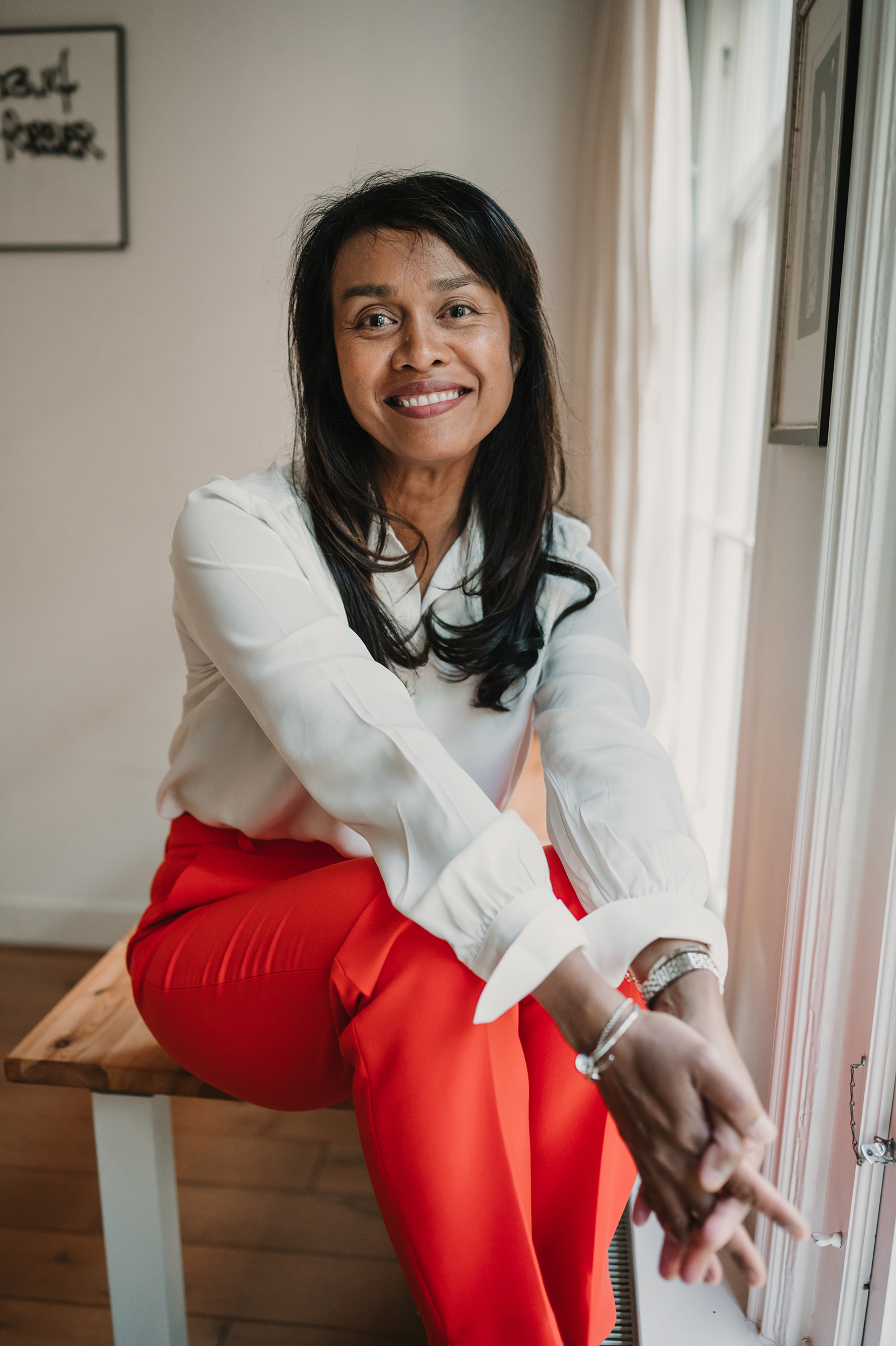
Author/Business Traction Strategist/Speaker/Mum
Nina Aziz Justin is a business traction strategist, resilience mentor, and TEDx speaker who has lived across five countries and worked in more than forty. Known as The Resilience Mentor, she weaves together eastern wisdom and western innovation to help leaders, founders, and seekers thrive through complexity.Her debut book, The Home Within: A Soulful Memoir of Self-Belonging Across Cultures and Change, blends memoir, neuroscience, and philosophy into a lyrical meditation on migration, motherhood, and reinvention.Born in Malaysia, Nina trained in law and holds a master's in publishing from the UK. Her career has spanned law, finance, media, and international business expansion. She is a multilinguist who is conversant in five languages, has founded several ventures, and was recognised by The Female Factor as one of the Voices of the New Era of Leaders in 2024.Beyond her professional life, Nina is a devoted mother of two daughters, one with a rare neurological condition, and brings an embodied understanding of resilience to her writing and her work. She also hosts the podcast Business Bites, where she explores the intersections of entrepreneurship, identity, and belonging.Nina believes that "home" is not just a place, but a rhythm and a practice of becoming. She writes to remind readers that belonging begins within.